SQL Tutorial
Learn SQL
SQL is a standard language for storing, manipulating and retrieving data in databases.
Our SQL tutorial will teach you how to use SQL in MySQL, SQL Server, MS Access, Oracle, PostgreSQL, and more.
Become SQL Certified
Get certified with our SQL exam, includes a professionally curated study kit to guide you from beginner to exam-ready.

Examples in Each Chapter
With our online SQL editor, you can edit the SQL statements, and click on a button to view the result.
Click on the "Try it Yourself" button to see how it works.
SQL Exercises
Many chapters in this tutorial end with an exercise where you can check your level of knowledge.
SQL Examples
Learn by examples! This tutorial supplements all explanations with clarifying examples.
SQL Quiz Test
Test your SQL skills at W3Schools!
Track Your Progress
Create a W3Schools account and get access to more features and learning materials:
 View your completed tutorials, exercises, and quizzes
- Keep an eye on your progress and daily streaks
- Join the leaderboard and compete with others
- Get your own avatar and unlock new skins
- Create your own personal website
Note
This is an optional feature. You can study at W3Schools without creating an account.
SQL References
At W3Schools you will find a complete reference for keywords and functions:
SQL Data Types
Data types and ranges for Microsoft Access, MySQL and SQL Server.
Get Certified in coding
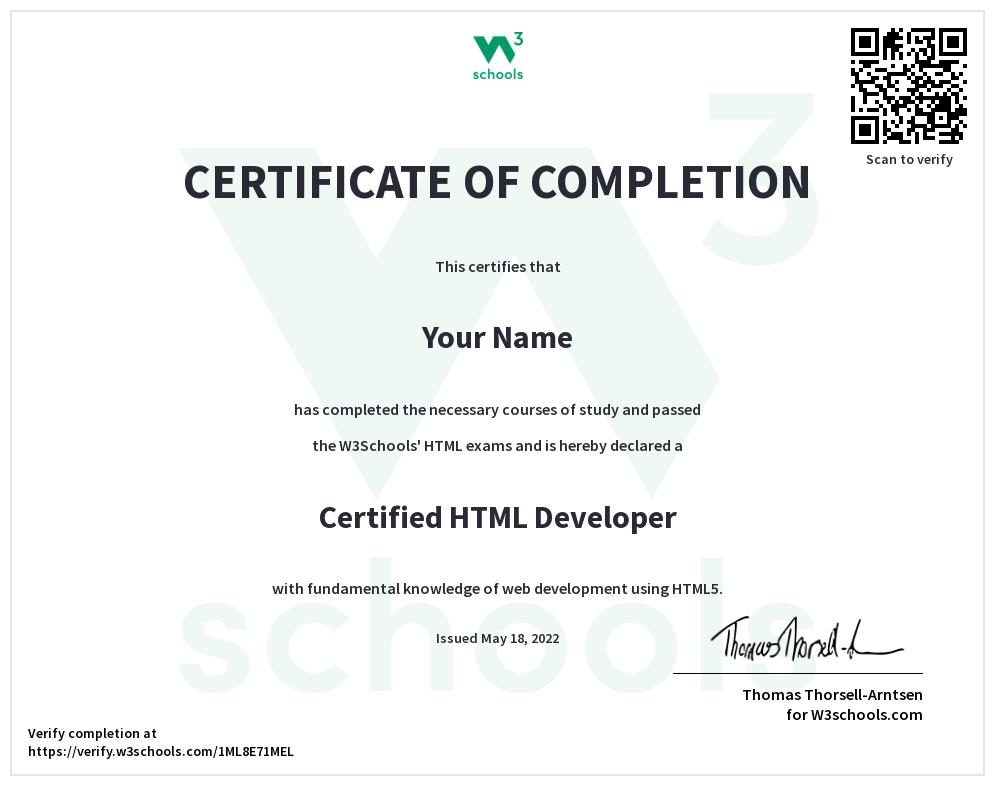
Complete the W3Schools coding course, strengthen your knowledge, and earn a certificate you can add to your CV, portfolio, and LinkedIn profile.